Acceptance criteria should be agreed before production so buyers, suppliers, and inspectors know what evidence will support a decision. Translate design and contractual requirements into measurable or observable conditions, identify the method and sample, and name who approves exceptions. Separate mandatory product requirements from preferences and system-level certificates. Clear criteria make supplier quotations comparable and reduce disputes when goods approach shipment.
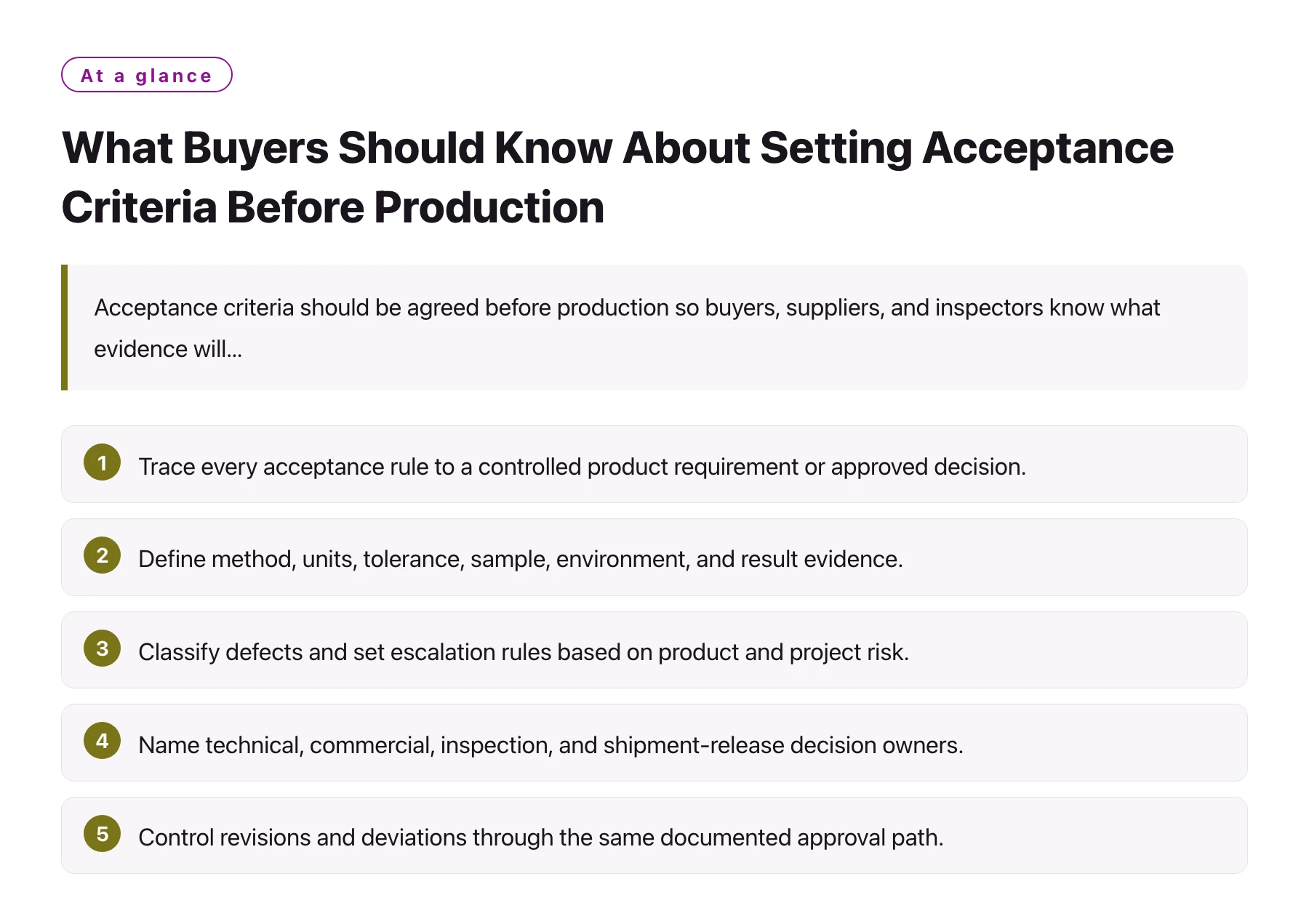
Key takeawaysTrace every acceptance rule to a controlled product requirement or approved decision. · Define method, units, tolerance, sample, environment, and result evidence. · Classify defects and set escalation rules based on product and project risk. · Name technical, commercial, inspection, and shipment-release decision owners. · Control revisions and deviations through the same documented approval path.
A criterion is usable only when the parties can apply it consistently to the same product version.
1. Start with intended use and product requirements
Describe the product, destination, user, operating conditions, quantity, and performance the buyer needs. Link requirements to drawings, specification clauses, applicable standards, samples, customer requirements, and project approvals. Identify which requirements are legal or safety-related, which are contractual, and which are aesthetic preferences. Do not let a supplier infer a critical tolerance from an informal product image.
ISO 9001:2026 defines requirements for a quality management system; a supplier’s QMS does not decide the buyer’s product-specific acceptance limits. Use system evidence to understand process management, while setting measurable acceptance criteria in the order and technical documents. [1]
2. Make each requirement testable
For each characteristic, define what is checked, how it is checked, which unit or sample is used, what equipment is needed, and what result is acceptable. A dimension should name the measurement point and tolerance. A function check should describe setup and expected behavior. A visual criterion should include reference samples, defect examples, lighting, or viewing distance when judgment depends on appearance.
Use units, rounding rules, language, and document revision consistently. If a characteristic cannot be checked during routine inspection, define the laboratory method, specialist, or evidence required. Ask whether the test is destructive and how many units are needed. Avoid criteria such as “premium quality,” “normal variation,” or “industry standard” unless the contract defines how those terms are applied.
3. Separate critical requirements from preferences
Classify requirements by effect if they fail: safety, regulatory, essential function, fit, durability, appearance, packaging, or convenience. A critical condition may need a hold regardless of the overall sample result. A cosmetic preference may allow a buyer review or documented concession. Explain the category and consequence before production rather than negotiating defect severity after a shipment fails.
Select criteria proportional to product risk. Avoid adding tests that do not serve the intended use or buyer requirement. When a requirement is uncertain, assign it to engineering, design, compliance, or another qualified owner. A sales contact or inspector may provide observations but should not create a technical limit without delegated authority.
4. Define lot, sample, and acceptance rule
Specify what forms the lot, how variants and production periods are separated, who selects samples, and how samples are identified. State whether the check is a full count, visual sample, measurement sample, functional test, or a combination. Where the project uses a sampling standard, record the exact edition, inspection level, scheme, and accept or reject rule.
For each check, state what happens at the boundary: pass, fail, retest, technical review, or hold. Define treatment of repeat defects, reworked units, missing documents, and inaccessible items. A sample plan supports a defined lot decision but does not prove every unexamined unit is conforming. Critical characteristics may require additional controls or a separate release gate.
5. Make evidence and decision roles clear
Identify who performs the check, who interprets specialized results, who can accept a deviation, and who releases shipment. Name required records: measurement sheet, report, photo, test certificate, sample comparison, or supplier declaration. Each record should identify the product, revision, lot, method, date, reviewer, and result. Keep supplier self-checks distinct from buyer verification and independent laboratory evidence.
A certificate or report should match the factory, model, scope, and date relevant to the order. State whether the buyer needs the complete file or a summary. If accreditation or a particular issuing body is required, specify it before the supplier places an order or schedules testing.
6. Communicate criteria before production starts
Send controlled criteria to supplier, factory, quality staff, and inspector through an agreed channel. Ask for written acknowledgement and let the factory raise conflicts or missing information before tooling or materials are committed. Confirm that translated instructions preserve limits, units, product codes, and revision labels. Retain a record of questions and answers so the production team can find the approved interpretation.
Hold a pre-production review for complex, customized, regulated, or high-risk orders. Walk through sample requirements, tooling, testing, process controls, packaging, and change approvals. If the factory believes a criterion is unachievable, resolve the conflict with the authorized buyer before production rather than accepting an informal exception later.
7. Control changes and deviations
Define what changes require new review: design, material, source, factory, process, test method, tolerance, sample, label, or packaging. Each change request should identify reason, affected items, evidence, cost, schedule, and impact on acceptance. Specify who approves and when the revision becomes effective. Preserve superseded criteria with a clear status so old copies are not used.
A concession should name the affected lot and quantity, the requirement being waived, technical rationale, residual risk, and any use or monitoring conditions. Do not treat a supplier’s promise to improve as authorization to ship. Verify corrective action separately and retain approval from the proper technical or commercial owner.
8. Review criteria after the first production run
After the first run, compare actual defects, test results, rework, inspection time, and receiving issues with the criteria. Ask whether the method detected the risks the buyer cared about and whether the factory could apply it consistently. Improve ambiguous wording or evidence fields through a controlled revision that applies prospectively unless the buyer explicitly reopens prior product.
Buyers coordinating JS Sourcing inspection services in China can connect pre-production criteria with factory checks and shipment reports. Keep the final product acceptance decision with the authorized owner, based on the contract, evidence, open deviations, and the defined release rules.
Sources
Frequently asked questions
When should acceptance criteria be set?
Set them before production and preferably before supplier quotation. This allows comparable bids, process planning, sample review, and inspection preparation against the same controlled requirements.
Can an inspector decide a missing tolerance?
No, unless the project formally delegates that authority. Route missing technical criteria to the authorized engineer or buyer before inspection and record the approved limit.
Are certificates the same as acceptance criteria?
No. A certificate provides scoped evidence. Acceptance criteria define the product requirements, test or observation method, decision rule, and authority for the specific order.
What should a deviation approval include?
Identify requirement, product and lot, reason, evidence, risk, quantity, cost and schedule impact, conditions, approver, date, and whether shipment or installation is affected.